The Beauty Business Brief:
Rhode by Hailey Bieber and the Power of Personal Brand as Market Moat
The Beauty Business Brief:
Rhode by Hailey Bieber and the Power of Personal Brand as Market Moat
If you ever needed proof that brand is a moat, look at Rhode.
Launched in 2022 as a tiny edited line of “glazed skin” essentials, Hailey Bieber’s brand went from DTC newcomer to a 1 billion dollar acquisition by e.l.f. Beauty in about three years, off roughly 212 million dollars in net sales in the year through March 2025. In a skincare market worth around 178 billion dollars in 2025 and still growing, that is not luck. It is precision. Precedence Research
Here is the important part. Rhode’s formulas are not sci-fi. The hero Peptide Glazing Fluid is a 29 dollar hydrating serum that supports the skin barrier. We are talking peptides, hydration, barrier care. Solid, but not unheard of. The edge is not in the INCI list. It is in the story, the edit, and the founder fit.
The power of “edited” in a noisy category
Most celebrity brands launch with clutter. Rhode launched with three products and a single promise: glazed donut skin. That focus let every asset say the same thing.
The results were ridiculous. At launch Rhode generated a waitlist of about 100,000 people, which later grew to more than one million across products. At peak restocks, the brand sold 36 units of Glazing Fluid per second. That is what happens when supply is kept tight, positioning is crystal clear, and the entire brand speaks in one visual sentence.
The product line is also priced in the “premium but reachable” pocket. You do not have to be a La Mer shopper to participate in the aesthetic. That pricing strategy widens the funnel without corrupting the aspirational feel.
Hailey as founder, not just face
Hailey is not a random celebrity slapped on a label. She is the proof of concept. Her 56 million Instagram followers have watched the evolution of “glazed donut skin” in real time. The Rhode look matches her personal brand perfectly: clean, neutral, minimal, a little sporty, very “expensive but effortless.”
That consistency does a few things:
It collapses the gap between influencer and product. When you buy Rhode, you are not just buying niacinamide, you are buying access to that specific finish on her face.
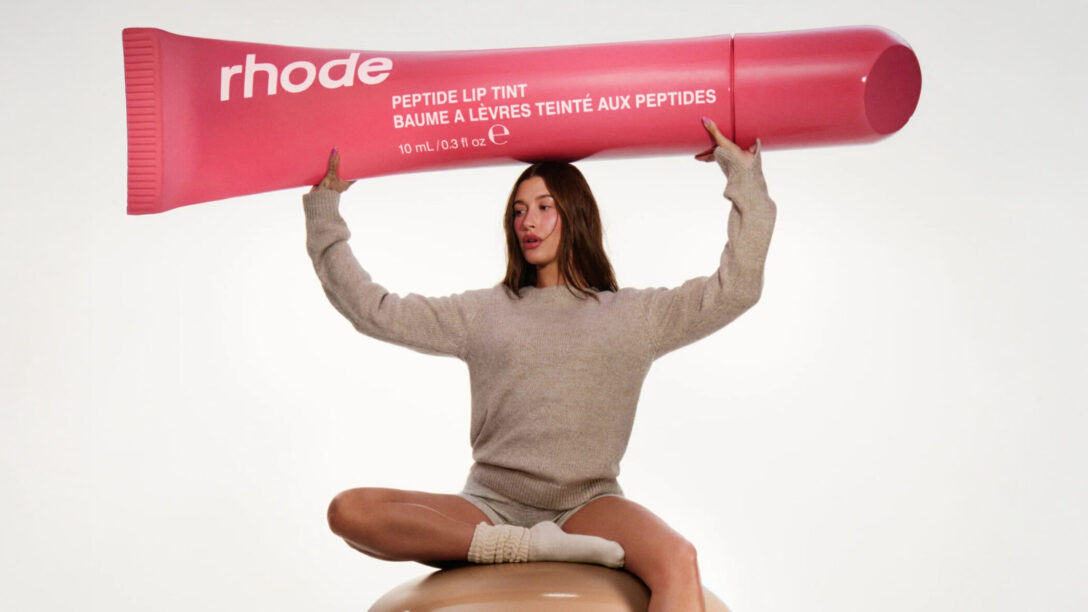
It makes the packaging do free work. Soft grey tubes, rounded edges, quiet typography. The bottles look like her closet. Consumers can spot them instantly in a flat lay.
It builds trust. Her public “no Botox until 30” stance, preference for less invasive treatments, and obsession with barrier health all reinforce what Rhode promises. Glamour
Founder market fit is real. Rhode is Hailey’s aesthetic bottled, which is why it feels coherent instead of opportunistic.
TikTok era mechanics, not old school media spend
Rhode is a case study in modern demand creation. The hashtag “rhode” has been viewed more than 7.6 billion times on TikTok. The brand leans into three levers:
UGC as default creative. GRWMs, “get the glaze with me,” bathroom selfies. The community shows the product in motion, on real faces, in real bathrooms, which de-glamorizes the buy and increases trust.
Scarcity as a feature. Early drops sold out quickly, which made restocks feel like events and turned “I finally got Glazing Fluid” into social currency. Vogue+1
Narrative hooks. Glazed donut skin. Latte makeup with Glazing Milk. Each launch plugs into a trend, but Rhode positions itself as the “base layer” that makes every look work.
Instead of shouting in a crowded ad space, Rhode engineered moments that people wanted to film for free.
From cult DTC to retail power move
The e.l.f. acquisition and Sephora rollout are the “scale” chapter. Rhode is now not only a viral DTC player. It is a prestige brand with the largest skincare launch in Sephora North America, with over 2 million unique searches for “rhode” on Sephora’s site and app even before the launch, and about 2 percent of Sephora skincare sales in its first days. ty
This is what every founder says they want. A brand that is born online, validated by community, and then graduates into retail without losing its edge.
What marketers should actually take from Rhode
If you strip away the celebrity halo, Rhode’s playbook is refreshingly simple:
Ruthless focus on one skin outcome instead of chasing every concern.
Product architecture that supports that promise, rather than a random SKU zoo.
Founder storytelling that matches the formulas, the visuals, and the lifestyle.
Tight, drop-driven distribution that turns availability into a story.
Community content as the primary ad unit, not the afterthought.
The formulas are not revolutionary. The execution is. Rhode proves that in a 178 billion dollar skincare market, the brands that win are not always the ones with the most complex science. They are the ones that make you feel like you are buying into a world, not just a serum.
If you ever needed proof that brand is a moat, look at Rhode.
Launched in 2022 as a tiny edited line of “glazed skin” essentials, Hailey Bieber’s brand went from DTC newcomer to a 1 billion dollar acquisition by e.l.f. Beauty in about three years, off roughly 212 million dollars in net sales in the year through March 2025. In a skincare market worth around 178 billion dollars in 2025 and still growing, that is not luck. It is precision. Precedence Research
Here is the important part. Rhode’s formulas are not sci-fi. The hero Peptide Glazing Fluid is a 29$ hydrating serum that supports the skin barrier. We are talking peptides, hydration, barrier care. Solid, but not unheard of. The edge is not in the INCI list. It is in the story, the edit, and the founder fit.
The power of “edited” in a noisy category
Most celebrity brands launch with clutter. Rhode launched with three products and a single promise: glazed donut skin. That focus let every asset say the same thing.
The results were ridiculous. At launch Rhode generated a waitlist of about 100,000 people, which later grew to more than one million across products. At peak restocks, the brand sold 36 units of Glazing Fluid per second. That is what happens when supply is kept tight, positioning is crystal clear, and the entire brand speaks in one visual sentence.
The product line is also priced in the “premium but reachable” pocket. You do not have to be a La Mer shopper to participate in the aesthetic. That pricing strategy widens the funnel without corrupting the aspirational feel.
Hailey as founder, not just face
Hailey is not a random celebrity slapped on a label. She is the proof of concept. Her 56 million Instagram followers have watched the evolution of “glazed donut skin” in real time. The Rhode look matches her personal brand perfectly: clean, neutral, minimal, a little sporty, very “expensive but effortless.”
That consistency does a few things:
It collapses the gap between influencer and product. When you buy Rhode, you are not just buying niacinamide, you are buying access to that specific finish on her face.
It makes the packaging do free work. Soft grey tubes, rounded edges, quiet typography. The bottles look like her closet. Consumers can spot them instantly in a flat lay.
It builds trust. Her public “no Botox until 30” stance, preference for less invasive treatments, and obsession with barrier health all reinforce what Rhode promises. Glamour
Founder market fit is real. Rhode is Hailey’s aesthetic bottled, which is why it feels coherent instead of opportunistic.
TikTok era mechanics, not old school media spend
Rhode is a case study in modern demand creation. The hashtag “rhode” has been viewed more than 7.6 billion times on TikTok. The brand leans into three levers:
UGC as default creative. GRWMs, “get the glaze with me,” bathroom selfies. The community shows the product in motion, on real faces, in real bathrooms, which de-glamorizes the buy and increases trust.
Scarcity as a feature. Early drops sold out quickly, which made restocks feel like events and turned “I finally got Glazing Fluid” into social currency. Vogue+1
Narrative hooks. Glazed donut skin. Latte makeup with Glazing Milk. Each launch plugs into a trend, but Rhode positions itself as the “base layer” that makes every look work.
Instead of shouting in a crowded ad space, Rhode engineered moments that people wanted to film for free.
From cult DTC to retail power move
The e.l.f. acquisition and Sephora rollout are the “scale” chapter. Rhode is now not only a viral DTC player. It is a prestige brand with the largest skincare launch in Sephora North America, with over 2 million unique searches for “rhode” on Sephora’s site and app even before the launch, and about 2 percent of Sephora skincare sales in its first days. ty
This is what every founder says they want. A brand that is born online, validated by community, and then graduates into retail without losing its edge.
What marketers should actually take from Rhode
If you strip away the celebrity halo, Rhode’s playbook is refreshingly simple:
Ruthless focus on one skin outcome instead of chasing every concern.
Product architecture that supports that promise, rather than a random SKU zoo.
Founder storytelling that matches the formulas, the visuals, and the lifestyle.
Tight, drop-driven distribution that turns availability into a story.
Community content as the primary ad unit, not the afterthought.
The formulas are not revolutionary. The execution is. Rhode proves that in a 178 billion dollar skincare market, the brands that win are not always the ones with the most complex science. They are the ones that make you feel like you are buying into a world, not just a serum.
If you ever needed proof that brand is a moat, look at Rhode.
Launched in 2022 as a tiny edited line of “glazed skin” essentials, Hailey Bieber’s brand went from DTC newcomer to a 1 billion dollar acquisition by e.l.f. Beauty in about three years, off roughly 212 million dollars in net sales in the year through March 2025. In a skincare market worth around 178 billion dollars in 2025 and still growing, that is not luck. It is precision. Precedence Research
Here is the important part. Rhode’s formulas are not sci-fi. The hero Peptide Glazing Fluid is a 29 dollar hydrating serum that supports the skin barrier. We are talking peptides, hydration, barrier care. Solid, but not unheard of. The edge is not in the INCI list. It is in the story, the edit, and the founder fit.
The power of “edited” in a noisy category
Most celebrity brands launch with clutter. Rhode launched with three products and a single promise: glazed donut skin. That focus let every asset say the same thing.
The results were ridiculous. At launch Rhode generated a waitlist of about 100,000 people, which later grew to more than one million across products. At peak restocks, the brand sold 36 units of Glazing Fluid per second. That is what happens when supply is kept tight, positioning is crystal clear, and the entire brand speaks in one visual sentence.
The product line is also priced in the “premium but reachable” pocket. You do not have to be a La Mer shopper to participate in the aesthetic. That pricing strategy widens the funnel without corrupting the aspirational feel.
Hailey as founder, not just face
Hailey is not a random celebrity slapped on a label. She is the proof of concept. Her 56 million Instagram followers have watched the evolution of “glazed donut skin” in real time. The Rhode look matches her personal brand perfectly: clean, neutral, minimal, a little sporty, very “expensive but effortless.”
That consistency does a few things:
It collapses the gap between influencer and product. When you buy Rhode, you are not just buying niacinamide, you are buying access to that specific finish on her face.
It makes the packaging do free work. Soft grey tubes, rounded edges, quiet typography. The bottles look like her closet. Consumers can spot them instantly in a flat lay.
It builds trust. Her public “no Botox until 30” stance, preference for less invasive treatments, and obsession with barrier health all reinforce what Rhode promises.
Founder market fit is real. Rhode is Hailey’s aesthetic bottled, which is why it feels coherent instead of opportunistic.
TikTok era mechanics, not old school media spend
Rhode is a case study in modern demand creation. The hashtag “rhode” has been viewed more than 7.6 billion times on TikTok. The brand leans into three levers:
UGC as default creative. GRWMs, “get the glaze with me,” bathroom selfies. The community shows the product in motion, on real faces, in real bathrooms, which de-glamorizes the buy and increases trust.
Scarcity as a feature. Early drops sold out quickly, which made restocks feel like events and turned “I finally got Glazing Fluid” into social currency. Vogue+1
Narrative hooks. Glazed donut skin. Latte makeup with Glazing Milk. Each launch plugs into a trend, but Rhode positions itself as the “base layer” that makes every look work.
Instead of shouting in a crowded ad space, Rhode engineered moments that people wanted to film for free.
From cult DTC to retail power move
The e.l.f. acquisition and Sephora rollout are the “scale” chapter. Rhode is now not only a viral DTC player. It is a prestige brand with the largest skincare launch in Sephora North America, with over 2 million unique searches for “rhode” on Sephora’s site and app even before the launch, and about 2 percent of Sephora skincare sales in its first days.
This is what every founder says they want. A brand that is born online, validated by community, and then graduates into retail without losing its edge.
What marketers should actually take from Rhode
If you strip away the celebrity halo, Rhode’s playbook is refreshingly simple:
Ruthless focus on one skin outcome instead of chasing every concern.
Product architecture that supports that promise, rather than a random SKU zoo.
Founder storytelling that matches the formulas, the visuals, and the lifestyle.
Tight, drop-driven distribution that turns availability into a story.
Community content as the primary ad unit, not the afterthought.
The formulas are not revolutionary. The execution is.
Rhode proves that in a 178 billion dollar skincare market, the brands that win are not always the ones with the most complex science. They are the ones that make you feel like you are buying into a world, not just a serum.
Next Blog: click